Do Bigger Cruise Ships Really Give You Better Value?
If a bigger ship carries more people, does that make it cheaper per person, or just more crowded?
Both answers are true, which is why the question keeps coming back.
A reader called Daniel sailed on a forty-five-hundred-passenger ship in June and a twelve-hundred-passenger ship in September, same region, similar week length, and he sent us both bills.
The larger ship was cheaper. He preferred the smaller one. Working out why turned into the most useful comparison we have run this year.
The headline economics favour size
Large ships spread fixed costs across more passengers.
Fuel per person falls. Crew per person falls. The cost of the theatre, the ice rink and the water park is divided by four thousand rather than twelve hundred.
Daniel’s seven nights on the large ship came in at roughly eighteen per cent less than his seven nights on the small one, cabin grade held constant.
On paper, the large ship won.
On board, it did not, and the reasons were all about time.
Where the time goes
Daniel started noting how long things took.
Breakfast in the main dining room: forty minutes on the small ship, seventy on the large one, mostly queue.
Getting off in port: twelve minutes versus fifty, because two thousand extra people funnel through the same gangway.
Booking a speciality restaurant: available on the day on the small ship, three days out on the large one.
He was not paying more money on the large ship. He was paying more minutes, in every direction, all week.
The port access problem
This is the part that rarely appears in the brochure.
Large ships cannot dock everywhere small ones can.
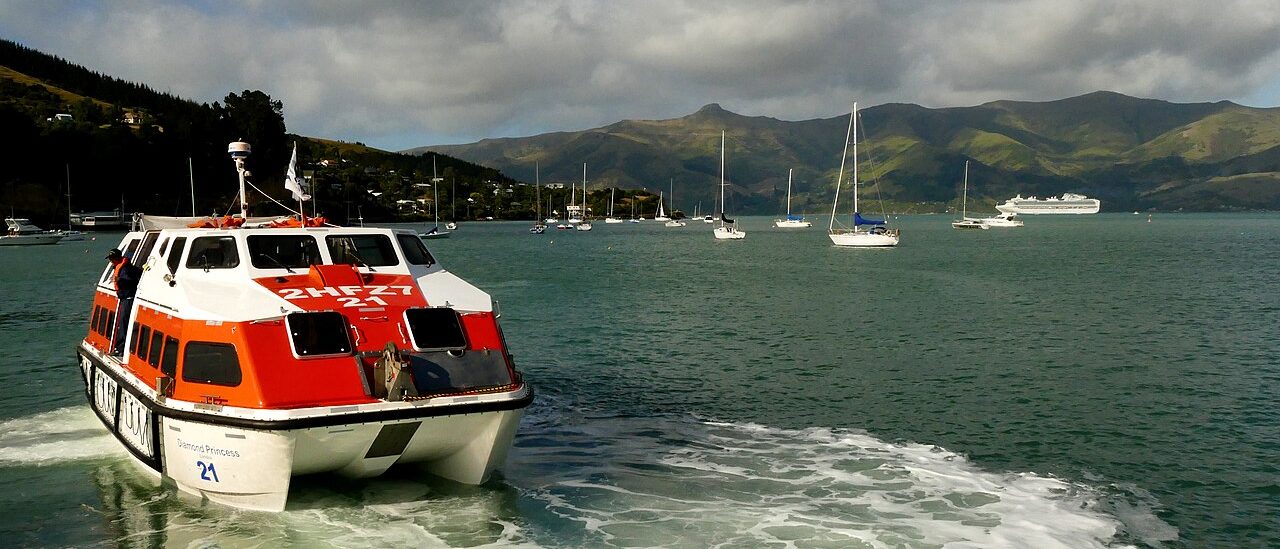
On Daniel’s itinerary, the big ship anchored offshore at two ports and tendered passengers in, which added an hour on each end.
The small ship walked straight onto the quay at both.
Over a seven-night sailing, that difference cost him four hours of shore time, and shore time is usually the reason people booked the route in the first place.
If a port matters to you, check the berth size before you check the fare.
What the large ship does better
It would be dishonest to leave it there, because Daniel found real advantages too.
The entertainment was in a different league. Three venues running simultaneously, a production show every night, a comedian who was actually funny.
The children’s facilities were genuinely extensive, which mattered to the families on board and cost him nothing.
Dining choice was wider: eleven venues against four.
If you want variety and you are travelling with children, the large ship is delivering something the small one cannot.
The crowding is not uniform
Here is the detail that changed how we think about this.
Daniel assumed a large ship means crowded everywhere.
It does not. It means crowded in the places everyone uses at the same time.
The buffet at nine in the morning was a scrum. The library at four in the afternoon was empty.
The main pool on a sea day was standing room only. The aft bar at eleven at night had free seats at the rail.
Large ships concentrate people. If you are willing to move against the flow, the crowd largely disappears.
The small ship’s hidden premium
There is a cost to sailing small that is not on the invoice.
Fewer venues means less choice, and on a rainy sea day that matters.
The gym on Daniel’s small ship had eight machines for twelve hundred people, and he queued twice.
Theatre seats were limited enough that you had to plan your evening around the show, not the other way around.
He described the small ship as calmer and the large ship as richer, and said he would choose differently depending on who he was travelling with.
Where the per-person maths breaks
The eighteen per cent saving on the large ship assumed Daniel spent nothing extra.
He did spend extra, and the reason is structural: a large ship has more ways to part you from money.
Six speciality restaurants instead of two. Three bars with a cover charge instead of one. A paid thermal suite, a paid escape room, a paid coffee bar.
His onboard bill on the large ship was thirty-one per cent higher than on the small one.
Net of everything, the small ship came out marginally cheaper, and he had a better week on it.
The question that decides it
Ask what you want the ship to do for you.
If the answer is entertain you, feed you in a different room each night and keep the children busy, take the large ship and accept the queues.
If the answer is get you to interesting places without wasting your day, take the small ship and accept the thinner evening programme.
Neither is a compromise. They are different products sold at similar prices.
The number to check before you book
Look up the passenger count and then look up how many ports on the itinerary are tender ports.
Two or more tender ports on a large ship means you will lose several hours of shore time, and that is usually where the eighteen per cent saving quietly disappears.
Then check the sea days. Large ships handle sea days far better than small ones, because there is simply more to do.
What to do next
Before you compare two fares, write down the ship’s passenger count, the number of tender ports and the number of sea days.
If you have two or more tender ports, price the small ship and treat the large ship’s lower fare as already spent on lost hours.
If you have three or more sea days and you are travelling with children, take the large ship and budget for the extra onboard spend, because it will come.