The Cruise Line That Suits Your First Sailing, Not Your Fifth
Which cruise line should you choose if you have never sailed before and you do not yet know what you like?
Most guides answer with the best line overall, which is the wrong question.
A reader named Owen took our advice to start with the highest-rated line and came home confused about whether he even liked cruising.
His second sailing, on a mid-range ship, convinced him he did.
What went wrong on the first attempt
Owen booked a small luxury ship because every review he read ranked it top.
There were four hundred passengers, one restaurant, one bar and no evening entertainment beyond a piano player.
He is thirty-four and travels to eat and to swim.
The ship had one pool, closed at six, and the restaurant served a tasting menu with no alternative.
He spent most of the week reading, which he could have done at home.
The mismatch was one of density
Luxury small ships are designed for passengers who want quiet, attentive service and long dinners.
Owen wanted options at every hour and something to do after ten at night.
Both preferences are legitimate. They simply belong on different ships.
The reviews were not lying. They were written by passengers whose idea of a good week is dinner and a book.
Choosing by score rather than by fit is how a good ship becomes a bad holiday.
The second sailing that worked
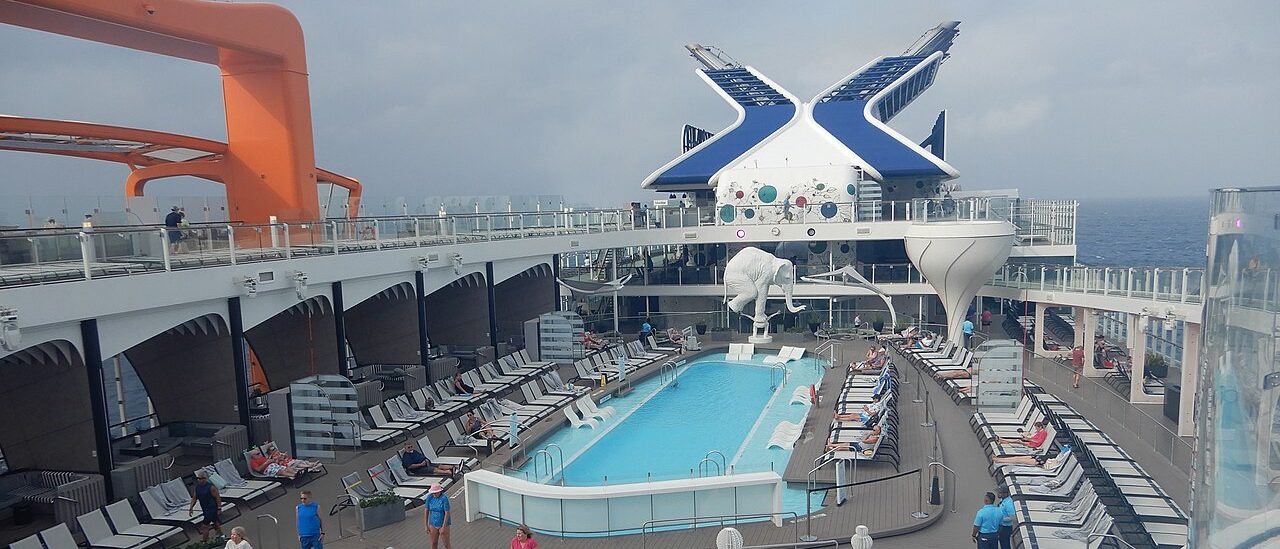
Owen’s second attempt was a mid-size ship with two thousand two hundred passengers, eight venues and a pool open until ten.
He described the difference as going from a hotel to a resort.
He still did not use the water slide. He did use the late pool, the sports bar and the second restaurant.
His fare was lower than the luxury sailing and he rated the week twice as highly.
Three questions that predict fit
The first is what time of night you expect to be doing something.
If the answer is after eleven, you need a ship with bars open past midnight and a late venue or two, which rules out most of the quiet luxury fleet.
The second is how you feel about set dining times.
Fixed sittings mean a guaranteed table and a schedule. Open seating means flexibility and a queue, and the queue can be forty minutes at peak.
Owen preferred open seating on the second ship even with the queue, because he would rather eat at nine than at six.
The third question, which matters most
Ask how much you want to be on the ship versus off it.
If the itinerary has one sea day in seven, you are booking a floating hotel that happens to move, and the ship’s facilities barely matter.
If it has four sea days, the ship is the destination and its public areas decide your week.
Owen’s first sailing had three sea days on a ship with nothing to do on them.
That is the single mistake that turned a premium product into a disappointment.
Start mid-range on purpose
Our advice to a first-time cruiser is to book a mid-range, mid-size ship deliberately.
It will not be the best at anything, and that is the point: it lets you find out which of the expensive extremes you actually want.
After one week you will know whether you missed the quiet, missed the crowd, or missed neither.
Owen now knows he wants a bigger ship and a later dinner, and he knows it from evidence rather than from a review.
The cost of getting this wrong
Owen’s luxury sailing cost him four thousand two hundred pounds for the week, all in.
His second sailing cost two thousand one hundred.
He spent double to have a worse time, and the only variable was fit.
That is an expensive way to learn a preference, and it is avoidable with three questions asked before booking.
When to start high instead
There is an exception worth naming.
If you already know you want quiet, attentive service and long dinners, and you have travelled that way on land, start where you finished on land.
The same logic runs in reverse: if you stay in small boutique hotels and eat at set times, a small luxury ship will feel correct immediately.
The mistake is not starting high or low. It is starting somewhere you have no evidence you like.
How to test without paying twice
Two cheaper ways exist.
Book a short three or four night sailing on a mid-size ship before committing to a fortnight. If you hate it, you have lost four days rather than fourteen.
Or book the same ship for a route with many ports, so that the ship’s shortcomings matter less because you are ashore most days.
Both approaches let you gather evidence at a fraction of the price of a wrong two-week booking.
What to do next
Answer three things in writing before you book anything: the latest hour you expect to want a bar, whether you can accept a fixed dinner time, and how many sea days the itinerary has.
Then pick a mid-range ship of two thousand to three thousand passengers for a first sailing of no more than five nights.
Use that week to find out which extreme you want, and spend the real money on the second booking.