Alaska: Which Month Changes Everything
If the Alaska cruise season runs from May to September, does it matter which month you pick?
It matters more than it does almost anywhere else, and the answer is not the one most people expect.
A reader named Paul sailed in May and again in July, same route, and sent us both sets of photographs.
He said the two weeks felt like different holidays in the same scenery.
The May case
May has the lowest fares of the season, sometimes thirty per cent below July.
Paul paid nine hundred and forty pounds for seven nights in mid-May and fourteen hundred and ten in mid-July for the same cabin grade.
He also had fewer other ships in port, which meant shorter queues and less crowded viewpoints.
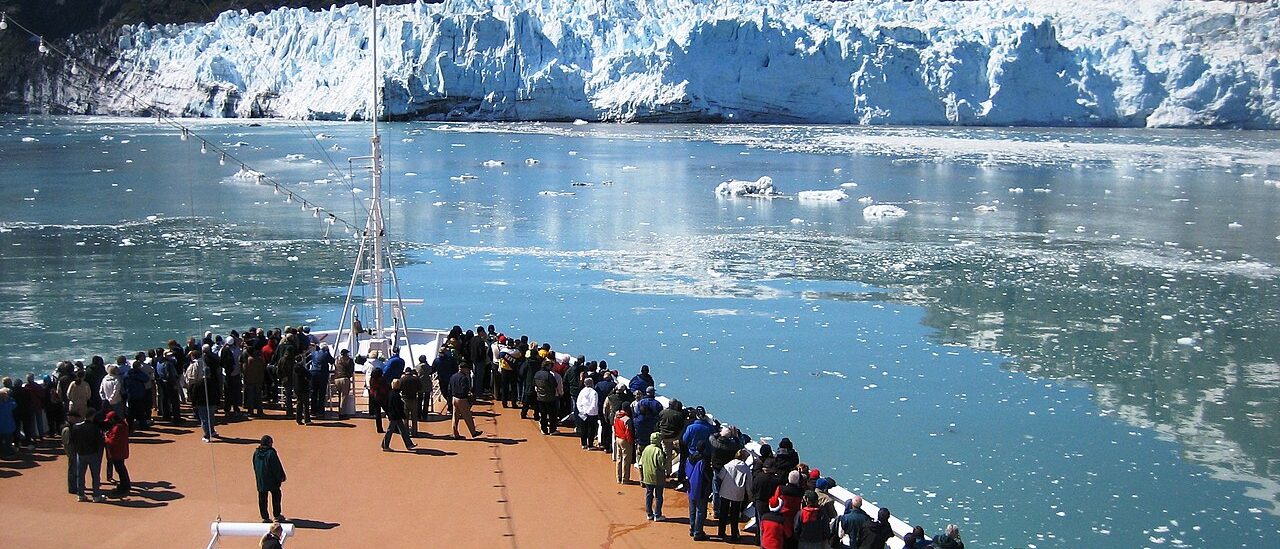
The snow was still down to the waterline in the fjords, which he said made the scenery more dramatic than the summer version.
What May costs you
Some excursions do not operate in May because the snow has not cleared.
Paul’s glacier trek was cancelled twice, and the alternative was a lower and shorter walk.
Wildlife is thinner: bears are not yet active at the salmon streams, because the salmon have not run.
And the weather is genuinely unsettled, with rain on four of his seven days.
The July case
July gives you eighteen hours of usable daylight, which changes what an evening at sea feels like.
Paul watched a glacier at eleven at night in full light, which he described as the single best hour of either trip.
Every excursion ran as scheduled, including the glacier landing and the bear-viewing trip.
The wildlife was the reason he went back: humpbacks, orcas, sea otters and a bear with two cubs at a river mouth.
What July costs you
The fare, obviously, and the crowds.
Paul counted five other ships at one port, against two in May.
The popular excursions sell out weeks in advance, and he had to book his bear trip before he had even paid for the cruise.
He also found the towns noticeably busier, which for a place with eight hundred residents is a different experience entirely.
The month nobody mentions
September is the compromise and Paul said he would choose it next time.
Fares fall back to May levels, the crowds thin out, the wildlife is still active because the salmon run is at its end, and the weather is often the most stable of the season.
The trade-off is fewer daylight hours than July, though still far more than at home.
It is the month that gets the best of both and is priced as though nobody has noticed.
The daylight arithmetic
It is worth understanding what the northern latitude does to your week.
In late May in southeast Alaska, sunset is around ten at night and sunrise around four. In late July it is still light past ten.
By late September you are down to twelve hours of daylight, which is enough for excursions but ends the leisurely evening glacier watching.
Paul’s eleven-at-night glacier hour is a July and August phenomenon only.
What the weather actually does
This surprised him.
May was wetter but warmer than he expected, and July was drier but cooler on the water.
The dominant factor was wind rather than rain, and the wind chill on a moving ship at glacier speed is severe in any month.
He said the single most useful item he packed both times was a waterproof outer shell, not a heavy coat.
Choosing between the two
Take May if you want the lowest fare, the least crowded ports and the most dramatic snow scenery, and you can accept cancelled excursions.
Take July or August if wildlife is the point of the trip, if you want every excursion to run, and if the late-night light matters to you.
Take September if you want most of July’s advantages at roughly May’s price and you do not need eighteen hours of daylight.
The booking problem
Whatever month you choose, the excursions are the constraint.
Alaska excursions involve aircraft, boats and permits, which cap capacity severely.
Paul booked his July bear trip two months before sailing and got the last two seats.
His May glacier trek he booked two weeks out and still had a choice of times, because half the season’s capacity was not yet operating.
What the fares do across the season
Paul’s two bookings were nine hundred and forty in May and fourteen hundred and ten in July, for the same cabin grade.
That is a fifty per cent premium for the same ship and the same route.
He said the July sailing was better and not fifty per cent better, which is the honest way to see it.
September sits between the two on price and he rated it the best compromise of the three.
What to do next
Decide first whether your priority is wildlife or scenery, because that determines the month.
Then look up the sunset time for your intended dates, and check whether a ten in the evening glacier view is something you want.
Then book the excursions before you book the cruise if you have fixed dates, because on a seven-night Alaska sailing the excursions are harder to get than the cabin.