Tender Ports: How to Keep Your Day
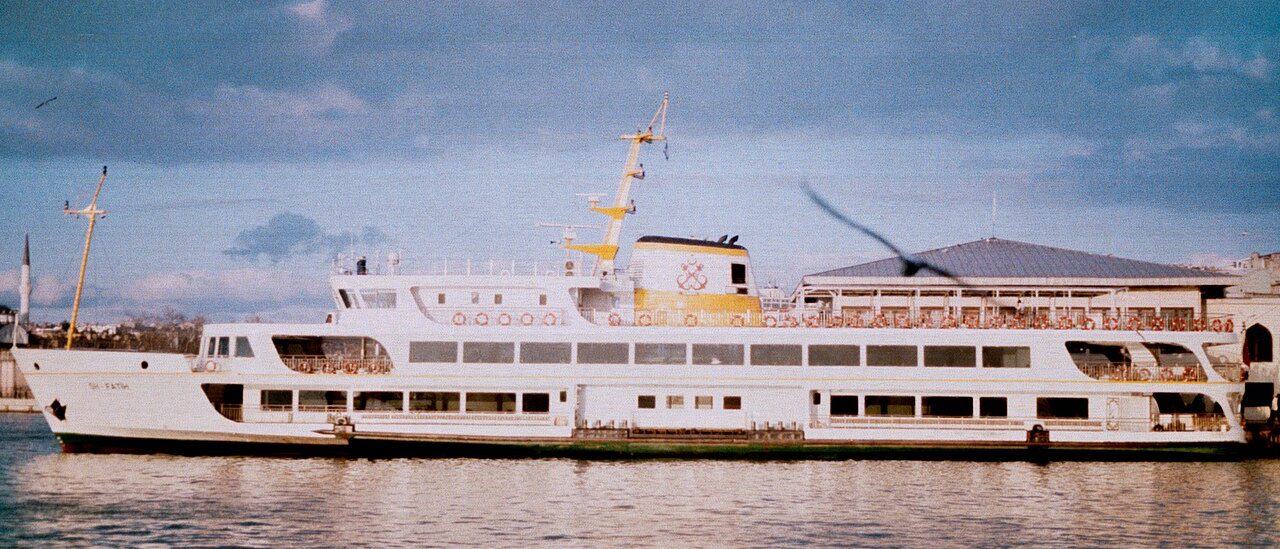
If the ship anchors offshore instead of docking, how much of your day does the tendering process take?
Between one and three hours, depending on how the ship organises it and whether you know the trick.
A reader named Isabelle lost ninety minutes at her first tender port and eleven minutes at her second.
Same ship, same week, different approach.
What tendering actually involves
The ship anchors in the bay and small boats ferry passengers to a pier in the town.
Each boat carries between eighty and two hundred people, depending on size.
A ship with three thousand passengers needs fifteen to thirty boatloads to move everyone ashore.
That arithmetic is why the process takes as long as it does.
How the priority works
Ship-organised excursions get off first.
Then suite and loyalty passengers. Then everyone else by ticket number, which is issued from a lounge.
Isabelle’s first attempt put her in the general queue, where her ticket was called two hours after she collected it.
Her second attempt involved a different approach entirely.
The trick that works
Isabelle’s solution on the second tender port was to wait.
The rush happens in the first ninety minutes after the ship is cleared.
She stayed on board, had a slow breakfast, and tendered at ten thirty.
The boat left with eleven passengers on it and took six minutes.
She was ashore by ten forty and stayed later than the people who queued at eight.
The last tender back
The return journey has the same problem in reverse, and this is the one that causes real anxiety.
The last tender typically leaves the shore forty-five minutes to an hour before the ship’s departure.
The queue for it starts ninety minutes before that.
Isabelle’s rule is to be at the pier two hours before the all-aboard time at any tender port.
She said the two hours are occasionally unnecessary and always preferable to missing the ship.
Why the queue forms at the end
It is not simply volume. It is that everyone tries to use every available minute ashore.
The last three tenders carry the same number of people as the first three, but they all arrive within a thirty-minute window.
Isabelle now returns on the second-to-last boat and describes the experience as calm.
She spends the last hour on the ship watching other people queue from the deck.
When tendering is cancelled
If the sea state is above a threshold, the captain cancels the port entirely.
Isabelle lost one port to weather across six sailings, which she said is a normal rate.
The ship usually substitutes a sea day and sometimes a different port.
She said the decision is made early in the morning and is announced by the captain, not the excursion desk.
Which ports need it
This is the information worth checking before you book.
Small Mediterranean islands, most of the Greek islands, several Caribbean stops, and most Alaskan ports apart from the main towns.
Isabelle’s rule is to count tender ports on any itinerary before booking, because two or more changes the shape of the week.
She said a route with three tender ports and short calls is a route where you will not see much.
What to do on a tender port day
Isabelle’s routine is now fixed and it has three parts.
Breakfast on board rather than ashore, because the queues are on the ship and the coffee is free.
Tender at least ninety minutes after clearance, when the rush has passed.
And return on the second-to-last boat, which leaves the final one to the people who cannot help being late.
What the crew told her
A crew member explained that the boarding process is slower at some ports than others for reasons outside the ship’s control.
Where the pier has a long floating pontoon, boarding takes longer because passengers must walk further and the boat cannot dock directly.
Isabelle said this explained why one of her ports was significantly slower than another of similar size.
It also means the delay is predictable if you know to look at the pier.
What the crew say about the queue
Isabelle asked a crew member why one tender port was so much slower than another of similar size.
The answer was the pier rather than the ship.
Where the boat can come alongside a floating pontoon, boarding takes about ninety seconds per passenger.
Where passengers must walk a long gangway and step down into a moving boat, the same boarding takes four minutes.
On a three-thousand-passenger ship that difference is two hours across the morning.
Isabelle now looks at the pier arrangement in the port guide before deciding when to go ashore, because it predicts the queue better than the port’s size.
What to do next
Before booking, count the tender ports and multiply by two hours each to see what the itinerary actually offers.
On the day, eat breakfast on board and tender ninety minutes after clearance rather than at the start.
And come back on the second-to-last boat, because being at the pier two hours before the all-aboard time is the only reliable way to avoid watching the ship leave from ashore.