Do You Actually Need a Balcony?
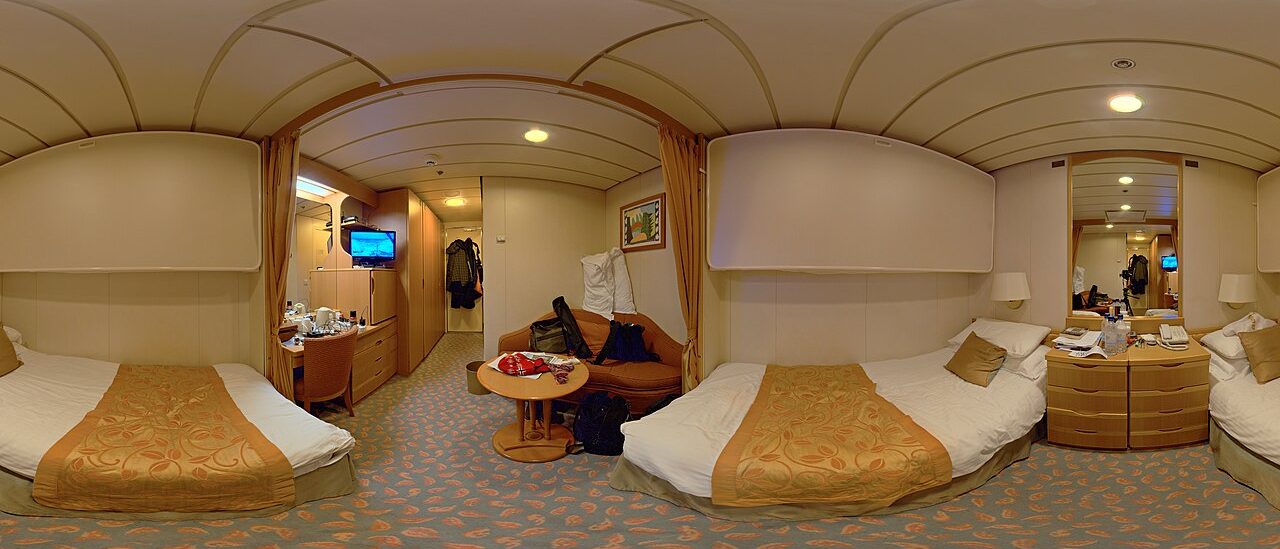
Is a balcony worth three hundred pounds more per person, or is it a room you look at twice a day?
A reader named Simon paid for one and kept a tally of how often he used it.
Over seven nights he sat on it for a total of four hours and eleven minutes.
That works out at roughly seventy pounds per hour of use, which is more than he had ever paid for anything.
How the balcony is actually priced
On Simon’s sailing, the gap from oceanview to balcony was three hundred and twenty pounds per person.
For a couple, that is six hundred and forty pounds, or ninety-one pounds per night.
The balcony added nine square metres of space, which he described as the most expensive square metres he had ever rented.
The oceanview cabin he would have taken had a large window and was on a lower, more stable deck.
When a balcony earns its price
Simon identified three situations where he would pay again without hesitation.
Scenic cruising, where the whole itinerary is about watching the coast go past from the ship.
Long crossings with consecutive sea days, because the cabin becomes your main room.
And warm routes with a lot of daylight, where an hour on the balcony at seven in the evening is genuinely pleasant.
When it does not
Simon’s sailing was port-heavy with one sea day, and he was ashore by eight most mornings.
He spent his afternoons on the pool deck, where there were other people and a bar.
His balcony was in shade from two in the afternoon because of the ship’s direction of travel, which he had not considered when booking.
On a northbound itinerary, the port side is sunny in the morning and shaded in the afternoon. On a southbound one it is the reverse.
The thing nobody tells you about choosing sides
If you are going to pay for a balcony, the side matters as much as the balcony itself.
For scenic routes, check which side faces the coast on the sailing direction you have booked.
Cruise forums will tell you, and the deck plans show which cabins are on which side.
Simon’s cabin faced open sea for four of the six days, which is why his figure was four hours rather than fifteen.
The obstructed view category
There is a middle option that most people miss.
Obstructed balcony cabins cost around twenty per cent less than a clear balcony and are blocked only by a lifeboat or a structural pillar.
On Simon’s ship, one obstructed category was blocked by a tender boat that occupied about a third of the view.
The rest of the balcony was clear and usable.
He said he would take an obstructed balcony next time and save the difference.
Inside cabin on a port-heavy route
A second reader, who sails inside deliberately on port-intensive routes, gave us the counter-argument.
She is off the ship by half seven and back at six, and she uses the cabin only to sleep.
Her saving across seven nights was nine hundred pounds for two people.
She spends three hundred of it on excursions and keeps the rest.
She said the only thing she misses is knowing what the weather is doing before she opens the door.
The dark room advantage
One advantage of an inside cabin that nobody mentions.
It is completely dark, which means you can sleep past sunrise in a northern destination where the sun rises at four.
Simon’s balcony cabin had a gap in the curtain that woke him before six every morning in a region where he wanted to sleep until eight.
The reader who sails inside said this alone was worth the saving on her last Alaska trip.
The upgrade you should take instead
If you have three hundred pounds to spend on a cabin, there is usually a better use.
On Simon’s ship, a midship cabin on a lower deck cost eighty pounds more than a forward cabin on a high deck, and reduced motion considerably.
On a rough route that is worth more than a balcony.
He also found that a cabin near the aft lifts saved him ten minutes of walking per day, which added up to over an hour across the week.
What the balcony is worth on a cold route
Simon sailed a northern itinerary with a balcony and used it for eleven minutes across seven days.
The temperature, the wind and the spray made it unusable, and the window was the only useful part.
He said an oceanview would have delivered the same view and the same daylight for two hundred pounds less.
On a warm route the same balcony was worth the money, which is why the itinerary has to come before the cabin grade in any decision.
What to do next
Write down how many sea days your itinerary has and how many hours you expect to be awake and in your cabin.
If the answer is under two hours a day, book the oceanview and put the saving into excursions.
If you have three or more sea days on a scenic route, book a balcony and check which side faces the coast before you choose the cabin number.