The Fjord Route That Earned Its Reputation
Why does one fjord itinerary cost twice as much as another when both sail from the same city?
Because they are not the same product, and the difference is measurable in hours of daylight and metres of width.
A reader named Marcus compared two seven-night Norwegian sailings priced nineteen hundred and thirty-five hundred pounds respectively.
He took the cheaper one first. He then took the expensive one a year later, which is how we got the comparison.
Where the cheap route goes
The cheaper sailing visited four ports, three of them coastal towns and one a city.
It entered two fjords, both wide and both busy, with several ships in each.
Marcus described the scenery as good and the experience as crowded.
He took a photograph of a view that contained four other cruise ships.
He also noted that the ship transited both fjords during the early afternoon, which is the flattest light of the day.
Where the expensive route goes
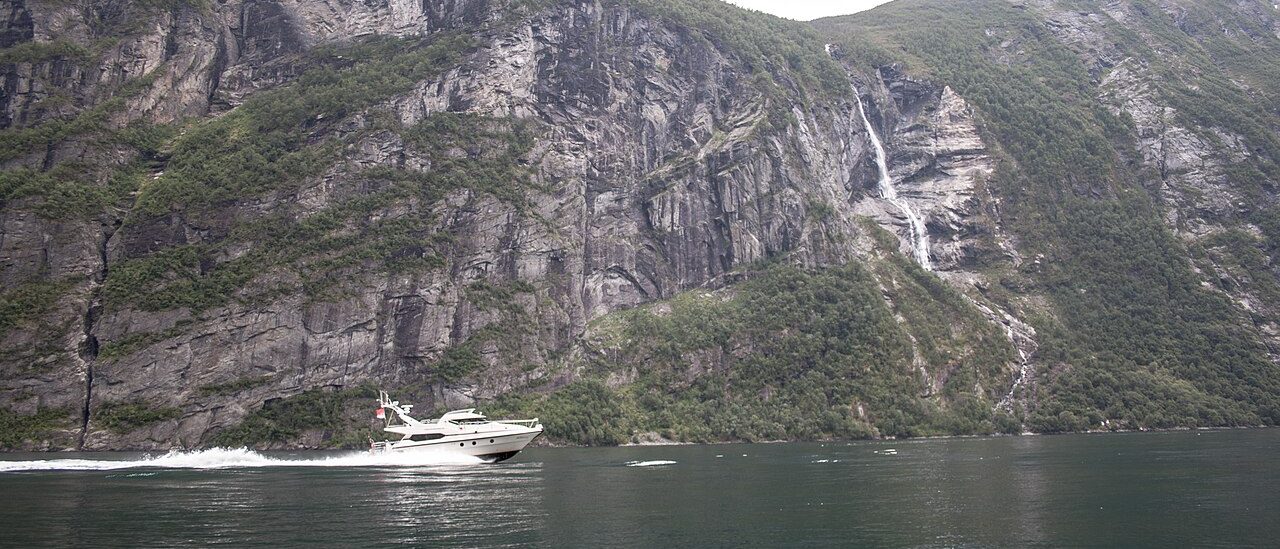
The second sailing entered three fjords, two of them narrow enough that the ship’s sides were within a few hundred metres of the cliffs.
It transited the longest one at six in the morning, which required getting up at five and was, in Marcus’s words, the best two hours of the trip.
Both sailings cost the same per night in cabin terms. The fare difference came from port fees, fuel and demand.
Narrow fjords charge higher fees, and the ships that enter them are smaller.
Size is the constraint
This is the fact that explains most of the price gap.
Several Norwegian fjords and their villages can only accept ships below a certain length and tonnage.
The most famous narrow arms are closed to large ships entirely.
Marcus’s first ship was too big to enter two of the three best fjords, so the itinerary routed around them.
His second ship was under two thousand passengers and could go in.
The daylight problem
Sailing season matters as much as the route.
Marcus’s first trip was in late August, when daylight still ran to nine in the evening but the sun was low and flat by four.
His second was in June, when it effectively never got dark.
The June sailing gave him the fjord transit in soft early light with no other ships moving.
Same country, same week length, completely different photographs and a completely different feeling.
What the ports are actually like
The coastal towns on the cheap route were pleasant and small.
Marcus said each one took ninety minutes to walk, after which there was a gift shop and a cafe.
On the expensive route, one port was a village of four hundred people reached only by sea, with no road in.
He spent three hours there and described it as the reason the route costs what it costs.
Accessible places are cheap. Places that require a narrow ship are not.
The sea day question
Both sailings had one sea day.
On the first, the sea day was a flat crossing with nothing visible on either side.
On the second, the sea day was inside a fjord system, which is not really a sea day at all.
Marcus spent it on deck with a camera rather than by the pool.
That is the kind of thing that never shows up in an itinerary comparison and changes the value completely.
What you give up on the expensive route
Being fair to the cheaper option, it has real advantages.
The bigger ship had better entertainment and more dining venues, which matters on a route with more sea time.
The coastal towns are genuinely charming and easier to walk independently.
Marcus’s parents took the cheap route the same year and had a wonderful week, because they wanted towns and comfort rather than cliffs and early alarms.
The calculation that settles it
Ask how many fjord transits happen in daylight, and in what light.
Then check whether the ship is small enough to enter the narrow arms.
Then check the month and how much darkness you will actually have.
If you get two or more narrow fjord transits in early light, the premium is buying you something nothing else can: a view that a larger ship simply cannot reach.
What the ship’s size costs you elsewhere
A smaller ship that can enter the narrow arms is usually older and carries fewer facilities.
Marcus’s second sailing had one restaurant, one bar and no theatre, which he accepted as the price of the scenery.
He said the trade was obvious once he had seen both, and impossible to judge beforehand from a brochure.
If you want a large modern ship and narrow fjords, there is no sailing that gives you both.
What to do next
Look up the maximum ship length for each fjord on your shortlist, and compare it with the ship you are considering.
Then check the transit times: anything between ten in the morning and four in the afternoon is flat light, and anything in the early morning or late evening is the reason people pay.
Then book the earliest sailing in the season you can manage, because the light is the product and the light changes by the week.