The Port Where Everyone Gets Off and Nobody Should
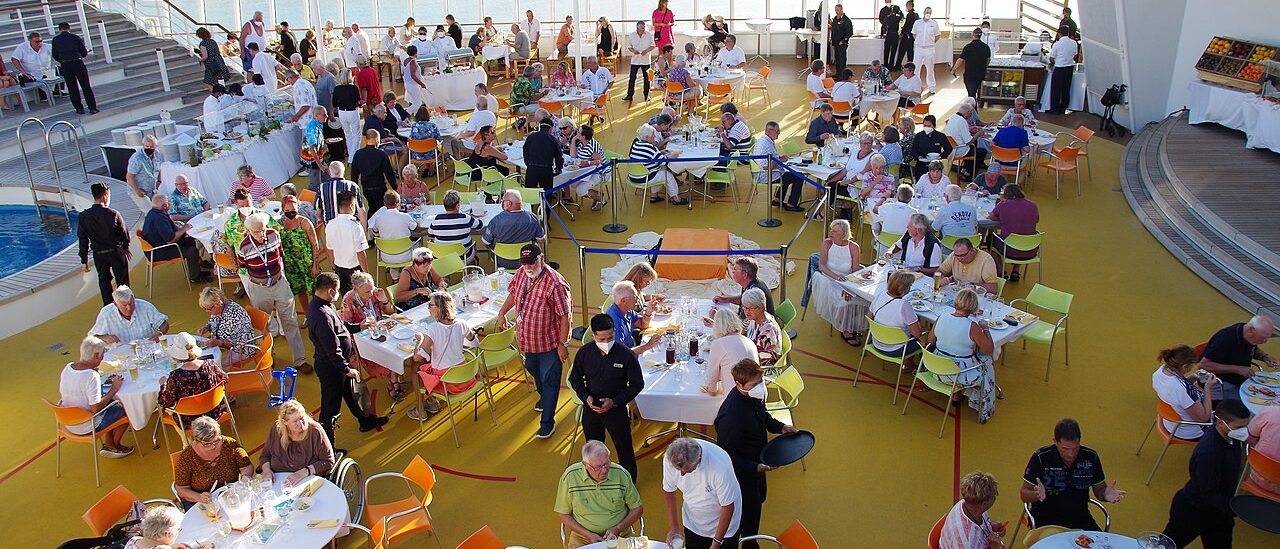
If everyone is going ashore, is staying on board a waste of a port or the best day of the week?
Sometimes the best, and the arithmetic is more favourable than it looks.
A reader named Marcus stayed on board at three ports across five sailings and rated all three among his best days.
He also identified which ports suit it and which do not.
What the ship is like when everyone is ashore
Marcus described the difference as dramatic.
The pool deck, which had been full by ten on every sea day, had eleven people on it at ten on a port day.
The gym, which required a queue for a treadmill on a sea day, was empty.
The buffet had no line, and the deck chairs along the promenade were all available.
He said it was the only time the ship felt like the ship he had paid for.
When staying on board makes sense
There are four conditions and Marcus found at least two present at every port where he stayed.
The port is one he has visited before. The port has little beyond shopping and a tender ride.
The weather is poor. Or the itinerary has enough port days that one can be given up without regret.
His best case was a tender port in the rain, where he stayed aboard, used the thermal suite and read for four hours.
When it does not
Staying aboard is a bad decision on a port you have never seen, particularly a major one.
Marcus’s worst call was skipping a historic city because he was tired, a decision he regretted within a day.
The rule he now applies is that a port is only skippable if he has been before or if the itinerary has five or more ports.
On a seven-night sailing with three ports, every one of them matters.
What is open
Not everything runs when the ship is in port.
The main dining room usually closes for lunch. Some bars operate reduced hours. The speciality restaurants are often shut.
The thermal suite, the pool, the gym and the buffet all remain open, and the buffet is the reliable option for lunch.
Marcus said he had never gone hungry, and the quieter buffet was a better experience than the sea-day version.
The spa discount
This is the practical advantage Marcus exploits most.
Spa prices drop on port days, typically by twenty to thirty per cent, because demand falls.
He books a treatment for a port day at the discounted rate and uses the money he saves on nothing else.
On one sailing he had a massage for ninety-three pounds that cost one hundred and forty on a sea day.
The crew’s perspective
A crew member told Marcus that port days are the only time the crew can use the facilities themselves.
The pool deck between two and four on a port day is where off-duty crew swim, which he found a genuinely interesting thing to see.
He also said the crew are noticeably more relaxed on port days, which changes the atmosphere of the ship.
He described a conversation with a bartender who had four hours off and spent them sitting at the bar Marcus was drinking at.
The photography advantage
One benefit Marcus had not anticipated.
The ship itself is photographable on a port day, because there are no people in the way.
He photographed the atrium, the promenade and the pool deck in the way the brochure shows them.
He said he had never managed an unobstructed photograph of the ship’s main staircase in five sailings, and got one in ten minutes on a port day.
The financial question
Staying aboard saves money, and it is worth quantifying.
A port day ashore costs between thirty and one hundred pounds per person, for transport, food, entrance fees and shopping.
Staying aboard costs nothing beyond what is already included, plus any discounted spa treatment you choose.
Marcus’s three stay-aboard days saved him around two hundred and forty pounds combined.
Which ports to skip
Marcus’s list of port types that suit staying aboard.
Any port that is primarily a shopping terminal with a shuttle to a mall.
Any port where the ship arrives late in the afternoon and leaves at nine, because the day is short and the value is low.
And any tender port in poor weather, where the journey ashore is uncomfortable and the time ashore is compressed.
He said a port that exists mainly to sell duty-free goods is a port that does not need your presence.
What to do next
Look at your itinerary and identify the one port with the least to offer, whether by size, distance or timing.
Plan to stay on board that day, and book a discounted spa treatment for the same afternoon.
Then use the pool, the gym and the buffet at the times when everyone else is ashore, because that is the quietest the ship will ever be.